
History of MBHS
Brief history of the founding of Methodist Boys’ High School, Lagos, from 1878 to the early years.
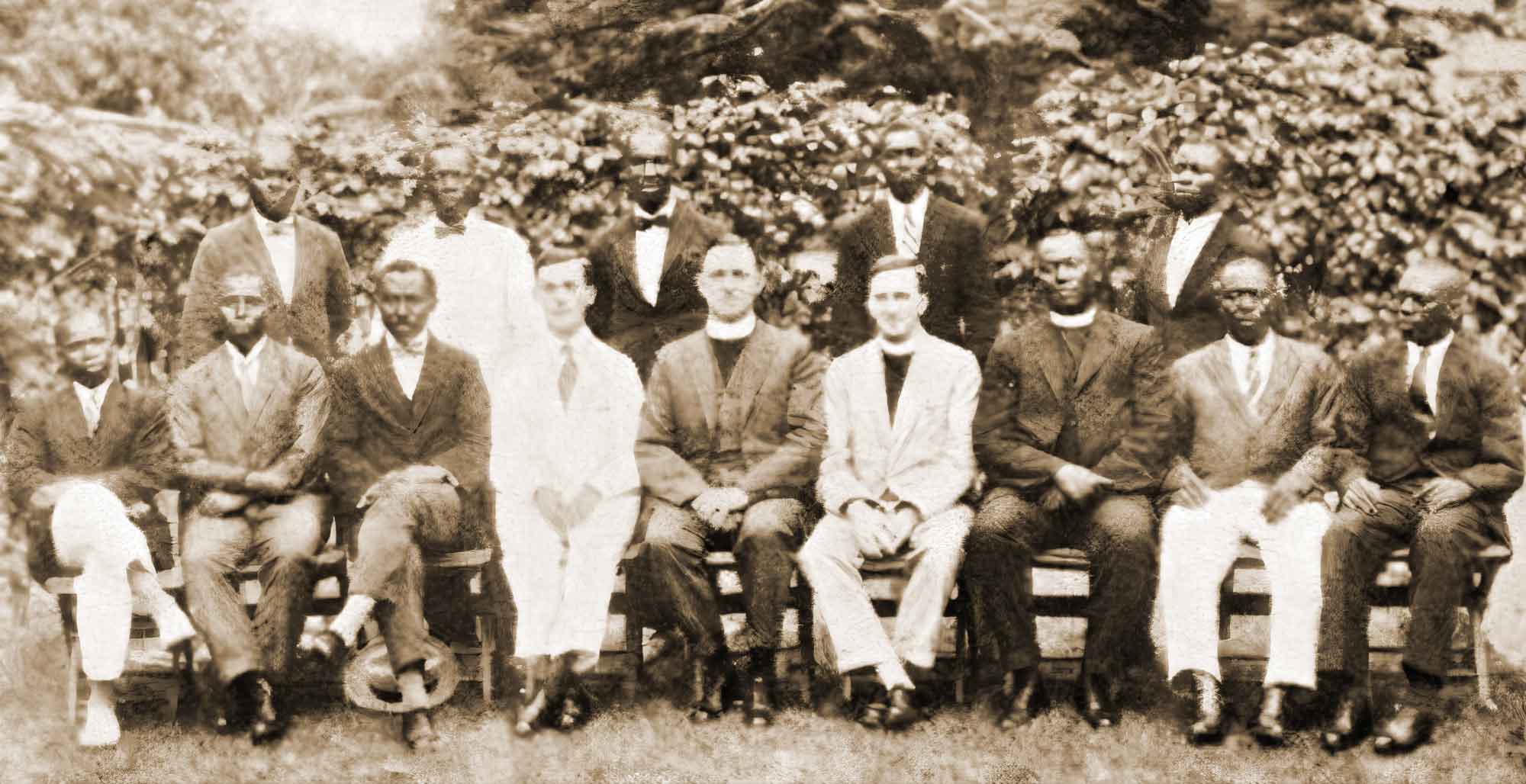
School staff, 1927
History of Methodist Boys’ High School (MBHS), Lagos
The origins of Methodist Boys’ High School (MBHS), Lagos, trace back to a broader historical desire among educated Africans for quality secondary education for their children. The establishment of the Church Missionary Society (C.M.S.) Grammar School, Lagos, in 1859 by Rev. T.B. Macaulay, marked the beginning of secondary education in Nigeria. Its success stirred aspirations among African members of the Methodist Church to establish a similar institution within their own denomination.
The first formal expression of this desire came in 1868 and again in 1870, but no action followed until a public meeting was convened on January 13, 1874, at Olowogbowo Methodist Church, led by Rev. John Milum. Prominent church members including Rev. N. Jones, J.H. Thomas, J.S. Leigh, W.P. Richards, and others attended. The group unanimously resolved to establish a high school and pledged £500 for a new building, as the existing mission house was deemed unfit for academic use. A follow-up meeting on January 22, 1874, reviewed a memorial prepared by J.H. Thomas and signed by 25 prominent Methodist members. This memorial highlighted two main reasons for establishing a Methodist high school: to prevent the drift of Methodist youth to Anglicanism via the C.M.S. school, and to train African agents for the mission.
The school aimed to function as both a grammar school and a training center for mission agents, with the former receiving greater emphasis. The proposal was sent to the Methodist Missionary Committee in England and was approved. A fundraising meeting was held on April 4, 1875, under Rev. Milum, and a Building Committee was formed. By June 1877, the school building was completed, equipped with modern educational tools for its time.
Official Opening and Early Years
MBHS was officially opened on March 14, 1878, by Governor John D.A. Dumaresq, with Rev. W. Terry Coppin as its first Principal, assisted by W.B. Euba and J.H. Samuel. The school began academic activities in April 1878 with 12 students, including George Stone Smith (later Dr. Orishadipe Obasa), who would go on to co-found Nigeria’s first political association, the Peoples’ Union, with Dr. John Randle in 1909. An additional six mission agents-in-training joined later that year, bringing the roll to 23 students and 7 agents.
The original school uniform, worn only on special occasions, featured black trousers and a white coat, with the school colours being white and gold. By the 1920s, the uniform changed to white trousers, brown blazers, and straw hats with the school badge, and the colours shifted to chocolate, blue, and gold. Eventually, the uniform was simplified to white outfits with a school cap, while the blazer remained for formal events.
Academic Focus and Curriculum
MBHS aimed to prepare students for both commercial and literary careers, catering to the emerging class of Lagos professionals and businessmen. The school’s prospectus outlined an extensive curriculum including English, orthography, writing, arithmetic, algebra, grammar, history, geography, and classical studies. Optional advanced subjects, offered at extra cost, included Latin, Greek, Hebrew, French, geometry, trigonometry, bookkeeping, drawing, moral philosophy, political economy, and various natural sciences. Despite this ambitious curriculum, limitations in staff and resources led to a more practical approach, with the Principal reserving the right to decide on extra subjects in consultation with parents.
Though the curriculum was ambitious, the school’s leadership emphasized moral and religious instruction. Rev. E.W. Thompson, Secretary of the Wesleyan Mission, reiterated in 1928 that the school’s goal was not only academic excellence but also the shaping of students’ character in the likeness of Christ. Christian discipline was integral: daily services at Trinity Methodist Church and Sunday School attendance were mandatory. Students also contributed to causes such as maintaining a bed in the Wesley Guild Hospital in Ilesha and donating to the British and Foreign Bible Society.
Reflecting this emphasis on service and selflessness, the school motto, originally Numquam non paratus (“Always prepared”), was changed under Euba’s principalship to Non sibi sed aliis (“Not for ourselves but for others”).
Governance and Administrative Changes
Initially managed directly by the Methodist Missionary Committee in England, the administration of the school changed in 1890 following a formal agreement transferring management to the Lagos Circuit of the Methodist Church. Under the agreement, the Lagos Circuit paid an annual rent of £4 for the school premises and was responsible for general maintenance, while the Missionary Committee handled major structural repairs.
To support the school financially, the Missionary Committee pledged to provide a grant of £100 for the year 1890, reducing by £10 each subsequent year until 1899. Additional donations included £10 per year for 1890 and 1891. For the training of mission agents, the committee agreed to pay £12 annually per student. Surplus funds were to be reinvested into the school at the discretion of the Local Committee, although the Missionary Committee retained the right to revoke the agreement and reclaim its property if the arrangement became unsatisfactory.
Following this transfer of control, a Local Committee was appointed to manage the school, comprised of twelve prominent Methodist members from the Lagos Section of the Gold Coast and Lagos District. The Chairman was the General Superintendent of the Lagos District. Members in 1890 included J.T.F. Halligey (Chairman), A.C. Franklin (Vice-Chairman), and other distinguished individuals like J.S. Leigh, J.J. Thomas, and G.T. Cole. Over the years, notable figures such as Dr. Obasa joined the committee, contributing significantly to its operations.
Legacy and Impact
Methodist Boys’ High School quickly established itself as a premier educational institution in colonial Nigeria. It not only set academic standards but also cultivated a tradition of civic responsibility, moral character, and leadership among its students. Many alumni would go on to play significant roles in Nigerian society, particularly in politics, medicine, religion, and commerce.
The school’s foundational vision—to combine academic rigor with Christian values—remains a cornerstone of its philosophy. Its traditions, such as charitable giving and emphasis on character development, have continued across generations, nurturing students who are not only intellectually capable but also morally grounded.